Written by the Pro-Tow Team
Providing heavy-duty recovery services throughout the Pacific Northwest
When a fully loaded semi-truck gets stuck in mud, getting it moving again often requires specialized recovery equipment, experienced operators and careful planning. Otherwise, you can cause costly damage, get the truck more stuck or put yourself and your rig at risk.
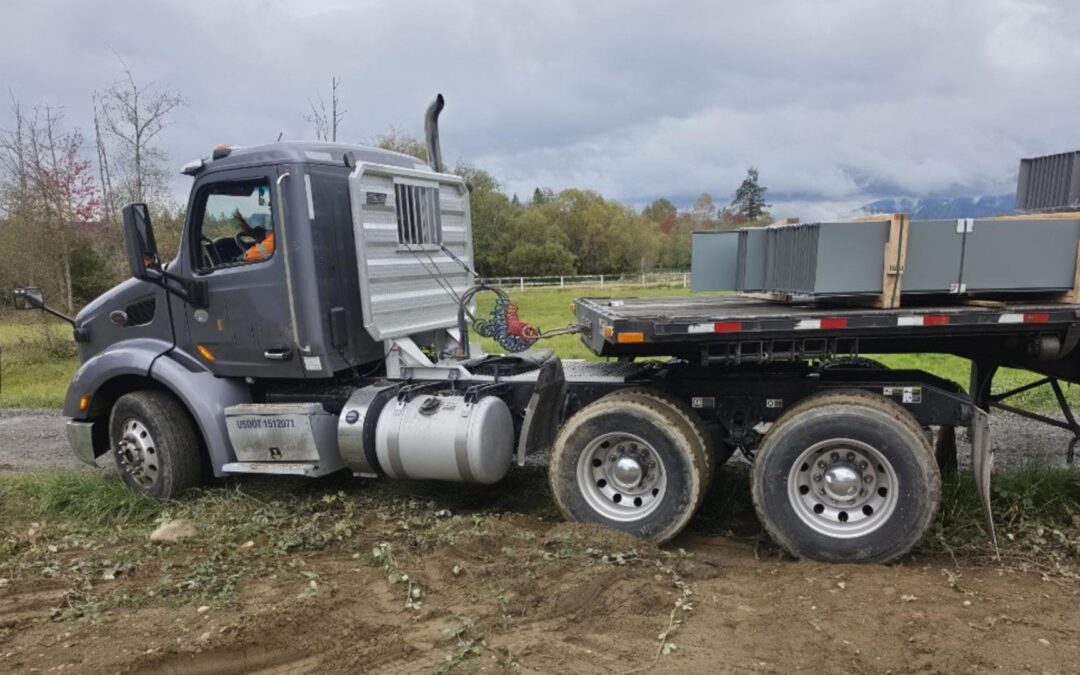
In a recent incident, Pro-Tow by FleetEasy was called on a semi-truck winch-out for a 2021 Peterbilt 379 that was stuck in the mud near a job site. It also had a loaded trailer attached, which added to the challenge. Here’s how we got the job done.
Off the Road and In the Mud in Issaquah
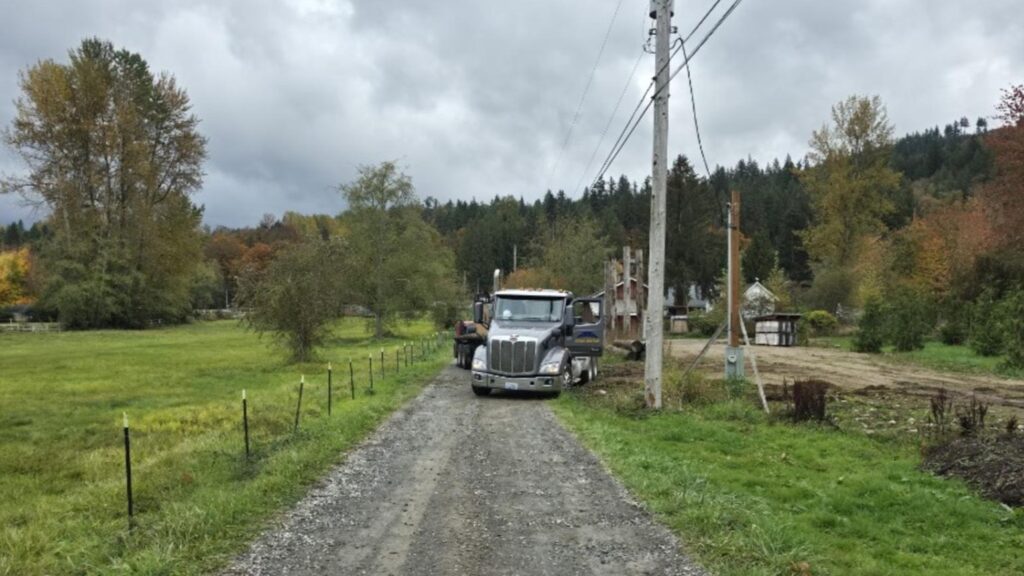 Construction sites, industrial yards and undeveloped access roads can create difficult conditions for heavy commercial trucks. Soft ground, wet soil and uneven surfaces can make it difficult for a semi-truck to maintain traction, especially when pulling a heavy trailer.
When this Peterbilt, hauling a heavy trailer, slipped off the small access road, getting stuck was inevitable. Pro-Tow arrived on scene and determined the safest heavy-duty recovery method.
The operator quickly recognized that the recovery truck would need to approach from the opposite direction to access the tractor properly. He moved the heavy-duty rotator recovery truck to the front of the tractor to get started. The operator disconnected the tractor and trailer so he could help free the semi-truck without pulling the trailer’s weight. Then he positioned the rotator, connected the recovery rigging to the tractor and prepared for the winch-out.
A nearby power pole presented an additional hazard. So, the Pro-Tow team had to control the direction of the recovery to guide the tractor away from the pole as it moved out of the mud. Slow and steady wins the race in this semi-truck winch-out game.
The Peterbilt was pulled free, and the operator helped reconnect the heavy trailer so they could get back on the road and back to work.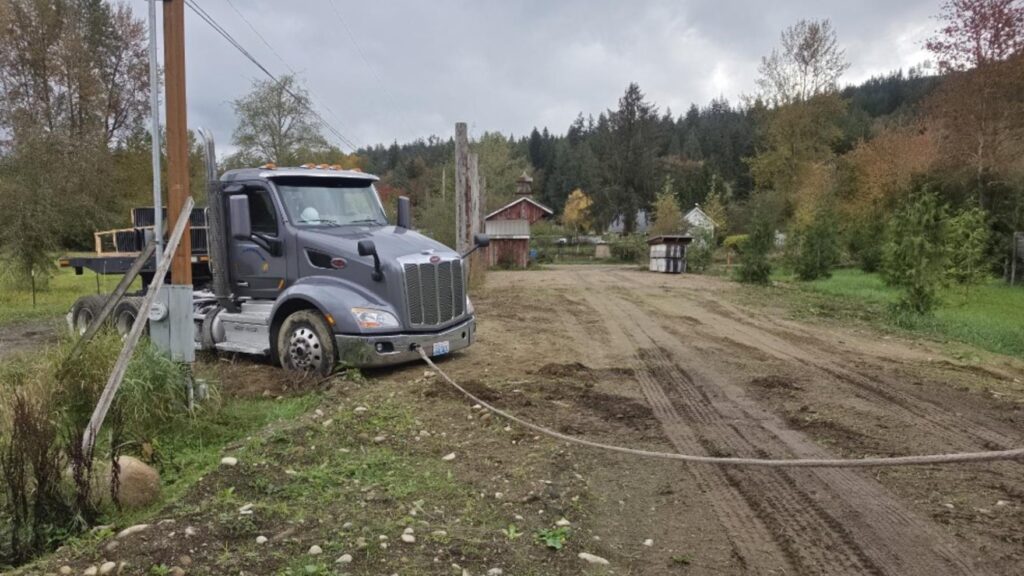
Important Safety Precautions During Heavy-Duty Recovery
Heavy-duty winch-outs involve substantial forces and should only be performed by trained personnel using equipment appropriate for the recovery.
Some of the most important safety considerations include:
Establishing a safe work zone: Keep drivers, bystanders and other workers clear of tensioned winch lines, rigging and potential vehicle movement paths.
Maintaining clearance from electrical hazards: Identify nearby poles and power lines. If electrical infrastructure is damaged, unstable or potentially energized, stop work and coordinate with the utility provider.
Monitoring ground stability: Muddy or uneven ground can shift under the weight of a recovery truck or disabled tractor.
Using properly rated recovery equipment: Winches, hooks, shackles, slings and attachment points must be suitable for the anticipated forces.
Avoiding sudden or uncontrolled pulling: Gradual, monitored winching helps operators maintain control and recognize changing conditions.
Maintaining clear communication: Recovery personnel and drivers need to understand their responsibilities and follow an established communication plan.
Reassessing throughout the operation: If the truck moves unexpectedly, equipment shifts or conditions change, operators should stop and evaluate the situation before proceeding.
The Peterbilt recovery highlights several of these precautions, particularly the importance of proper positioning, controlling the pulling direction and avoiding nearby obstacles.
Semi-Truck Winch-Outs and Heavy-Duty Recovery in Washington
Pro-Tow, part of the FleetEasy Company of Family, provides heavy-duty towing and recovery services from its operations in Auburn and Spokane, Washington, supporting commercial vehicles throughout its service areas.
Whether a semi-truck is stuck in mud, has left the roadway or has been in an accident, Pro-Tow’s experienced operators assess the situation and determine an appropriate recovery approach. Partner with Pro-Tow by FleetEasy, and ensure you have the assistance you need for your heavy-duty fleet, 24 hours a day.