Written by the Pro-Tow Team
Providing heavy-duty towing in Spokane, Auburn, Maple Valley and Washington State
When a commercial trailer suffers axle damage, getting it off the road can be complicated. Depending on the extent of the damage, the trailer may no longer be safe to tow using conventional methods. Its height, weight and remaining cargo can create additional challenges.
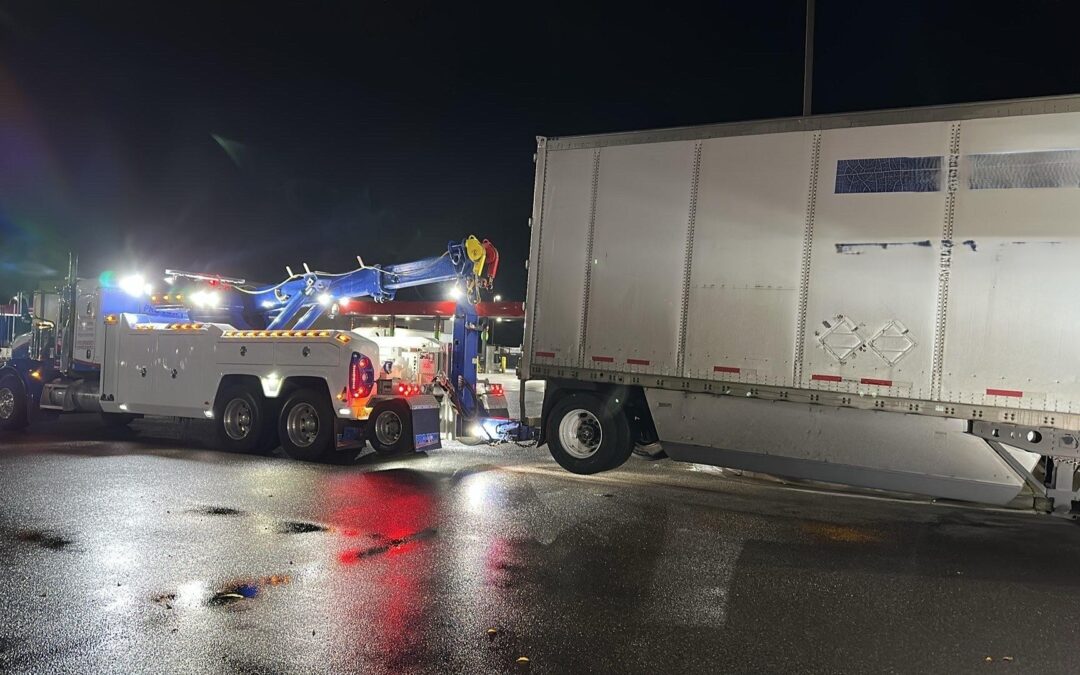
Recently, the Pro-Tow team responded to a commercial trailer breakdown that required a specialized heavy-duty towing solution. With a damaged axle, a partially loaded trailer and severe winds complicating the recovery, the operators had their work cut out for them!
Here is what happened in this commercial towing job in Olympia, Washington.
Assessing a Commercial Trailer with Axle Damage
The recovery began when Pro-Tow received a dispatch request to transport a commercial trailer with axle damage. The initial request suggested using a flatbed or dolly. However, the trailer was too tall to transport on Pro-Tow’s Landoll trailer. It had to be the dolly.
After coordinating with FleetNet, the team planned to use Pro-Tow’s heavy-duty tandem-axle dolly. We had to bring a heavy-duty recovery wrecker to the scene, along with a flatbed tow truck carrying the dolly.
This initial assessment is a critical part of commercial trailer towing. Operators must consider the trailer’s dimensions, weight, cargo, damaged components and available recovery equipment before determining how to move it.
Using a Heavy-Duty Dolly for Trailer Towing
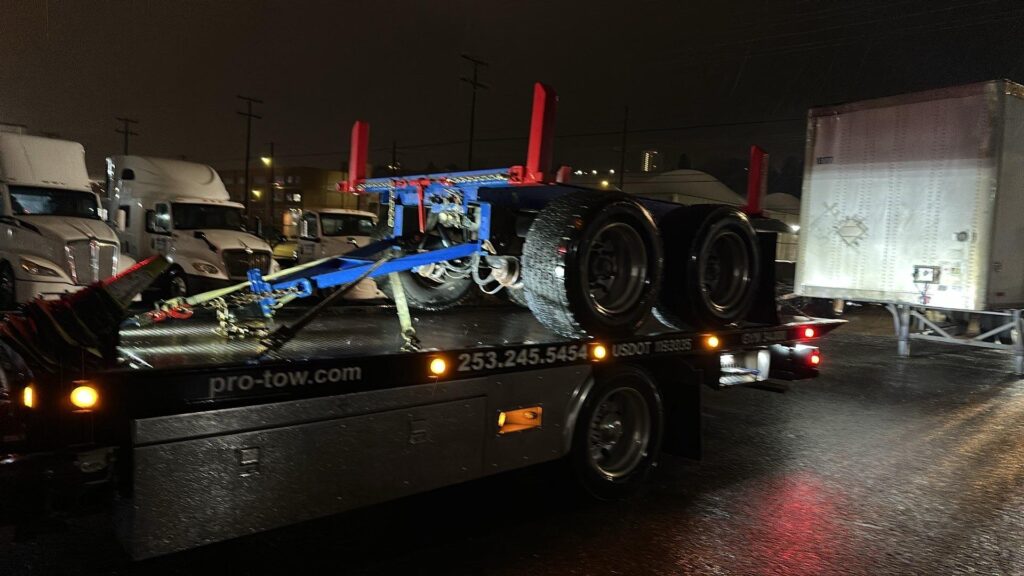
Once the recovery equipment arrived, the operators began preparing the damaged trailer for transport. The trailer was lifted so the heavy-duty tandem-axle dolly could be positioned and connected beneath its front end. The dolly was then secured to support the trailer during towing.
The heavy-duty wrecker was connected to the rear of the trailer, allowing the team to tow it with the front supported by the dolly. Heavy-duty dollies can be valuable tools for recovering commercial trailers with certain types of axle or wheel-end damage. However, their use requires careful planning, suitable equipment capacity and secure connections.
Severe Winds Add Another Challenge
The trailer was partially loaded when the wind started blowing aggressively! A storm was moving into the area that night. Pro-Tow operators had to move slowly, considering the cargo and the trailer’s condition.
Strong crosswinds can affect the stability of tall commercial trailers, particularly when they are damaged or being transported using specialized recovery equipment. The last thing we needed was a tipped-over trailer mid-recovery, so slow and steady won the race on this trip.
Completing the Recovery and Returning Equipment
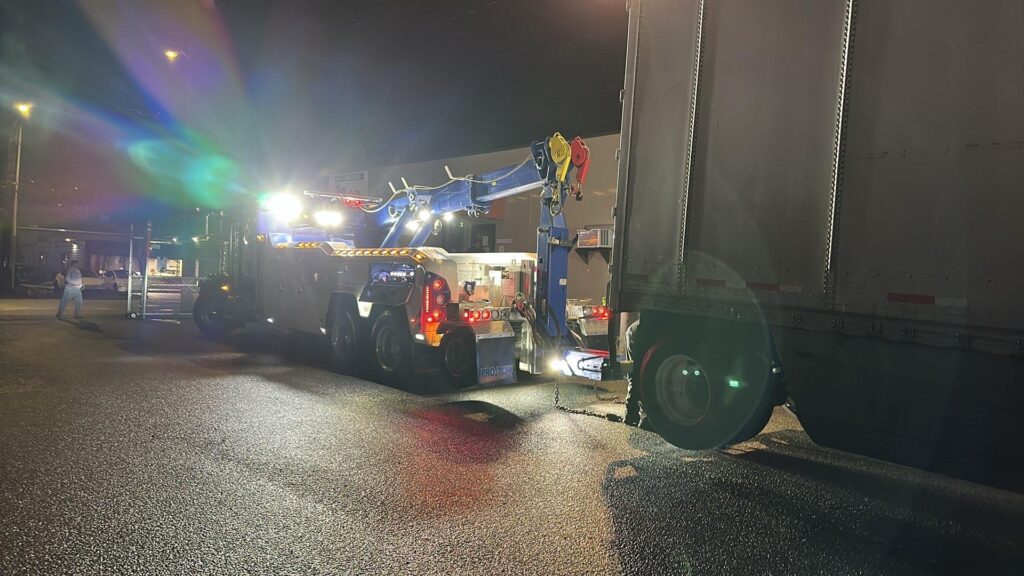
After safely reaching the destination, the team began disconnecting the recovery equipment. The trailer was positioned and lifted again so the tandem-axle dolly could be removed. The heavy-duty wrecker then returned to the Pro-Tow yard. The dolly was loaded and secured on the flatbed tow truck for transport back to the yard, where it was offloaded. Another heavy-duty towing job in Washington was complete.
The operation required coordinated dispatch, multiple recovery vehicles, specialized towing equipment and careful driving in challenging weather conditions.
Why Commercial Trailer Towing Requires Specialized Equipment
Commercial trailer towing is different from towing a passenger vehicle or even a disabled tractor. Trailers may be partially or fully loaded, have damaged axles or suspension components, or exceed the height limits of certain transport equipment. Here are some factors to consider:
-
- Trailer damage: Determine whether the axles, wheels, suspension or frame can safely support movement.
- Height and clearance: Assess whether the trailer can be transported using available equipment and within any route restrictions.
- Cargo and weight distribution: Consider how the load affects stability and towing requirements.
- Recovery equipment: Choose the right rated wreckers, dollies and rigging for the situation.
- Road and weather conditions: Evaluate wind, visibility, traffic and other hazards that could affect transport.
- Safe loading and unloading: Plan how the trailer will be supported, secured and disconnected at its destination.
With all this in mind, Team Pro-Tow can put together a recovery plan that protects the customer’s asset and ensures safety from start to finish.
Heavy-Duty Towing in Washington State
When a commercial truck or trailer breaks down, businesses need a recovery provider with the equipment and experience to handle challenging situations.
Pro-Tow, part of the FleetEasy Company of Family, provides heavy-duty towing in Auburn and Spokane, supporting commercial vehicles and trailers throughout its Washington service areas.
Need heavy-duty towing or commercial trailer towing in Washington?