Written by the Pro-Tow Team
Providing 24-hour heavy-duty towing throughout Washington State
When vehicles sit too long, vital parts start to degrade. The battery will drain, tires will go flat, fluid will break down, and any fuel left in the tank will oxidize. Things will start to rust, including the brake rotors, and it’s likely pests, rodents, mildew and mould will make a home in the vehicle.
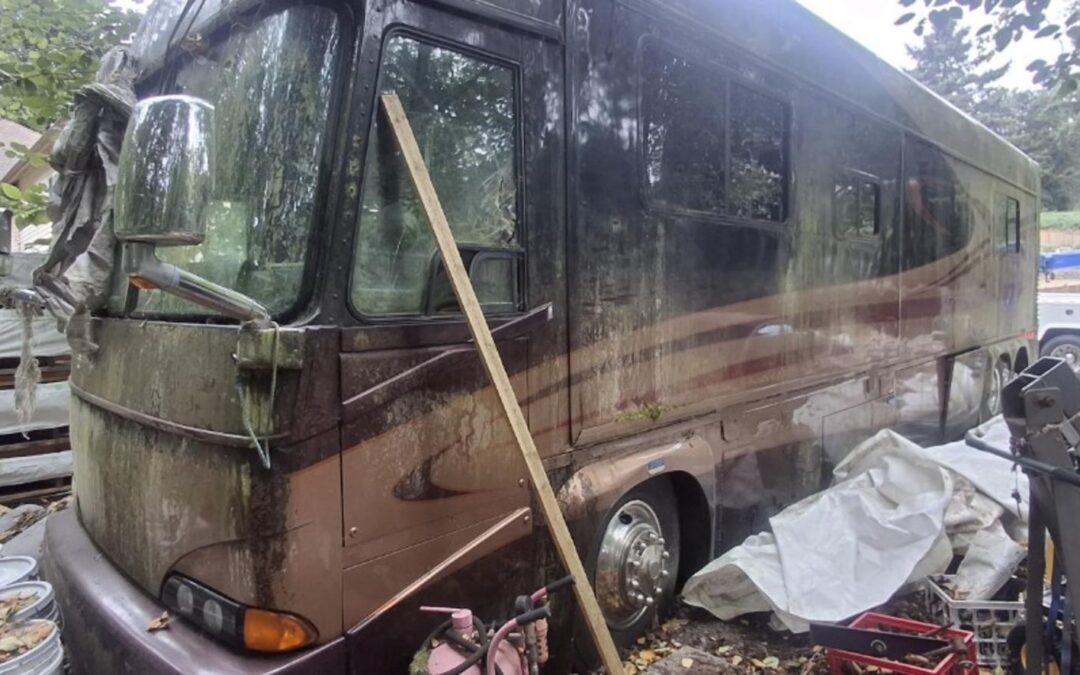
Pro-Tow was recently dispatched to recover an RV coach that had been left sitting on a property for two decades. It was in rough shape, to say the least. Before the vehicle could even be hooked up, the recovery team had to work through several obstacles to make sure the tow was safe. If they couldn’t make it safe, the tow wasn’t going to happen.
Upon arrival, the team made a plan to get this old, deteriorating beast out of the yard.
Abandoned Bus is a Towing Challenge
When a large vehicle has been sitting in one place for 20 years, getting it ready to move can take considerably more work than a conventional tow.
At the property, the Pro-Tow operator found that several obstacles needed to be addressed before the bus could be hooked up. The first challenge was the air suspension.
The team tried several options to supply air to the vehicle’s airbags. The owners had new batteries available and installed them, which allowed the airbags to raise. However, only one of the front airbags ultimately came up.
That limited the available clearance and created another challenge for getting the bus out of the property.
More Clearance Required
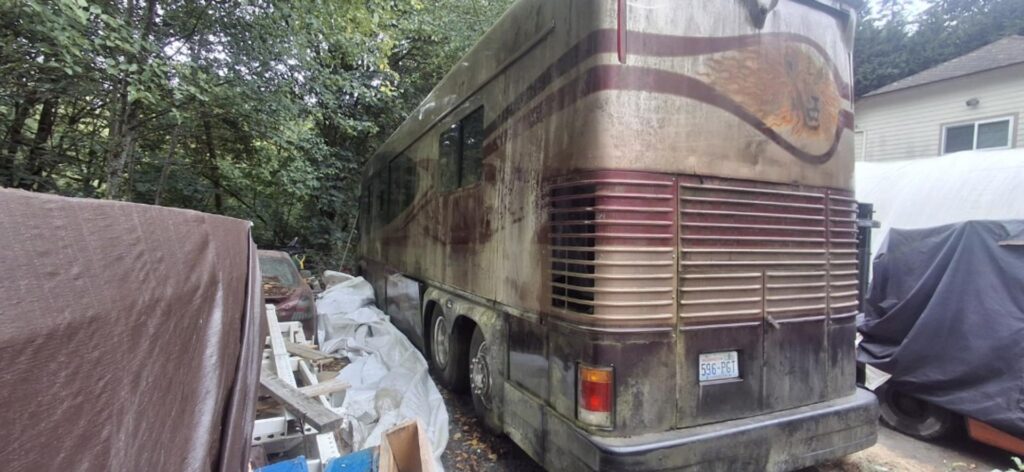
The owners determined that the front bumper could be removed to provide the clearance needed for towing and to clear the curb. Before that could happen, our operator needed to establish a secure rear connection. Finding a suitable place to attach the rigging was not straightforward because there was not much available to chain to.
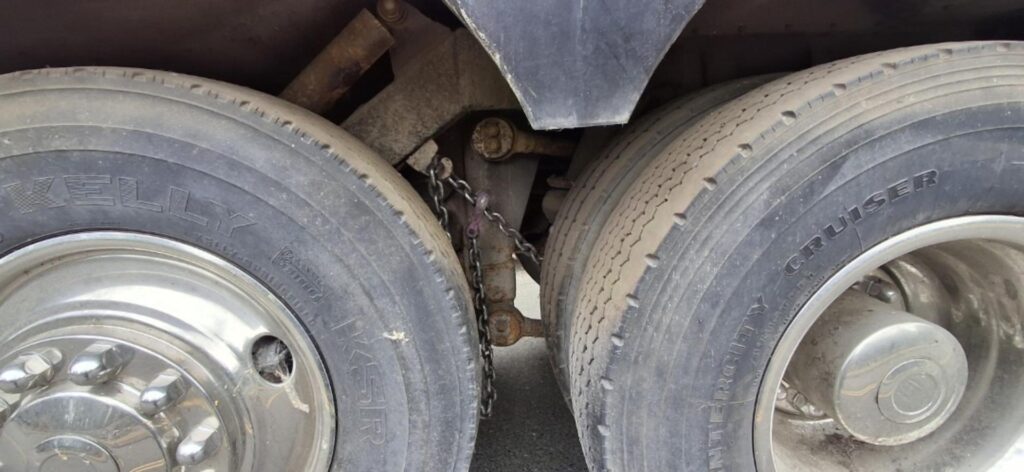
After checking over any and all options, the operator found a secure way to chain the rear of the vehicle. The rear axle was then chained as well, allowing the bus to be moved far enough to provide access to the front bumper.
Once the steering wheel was secured, the vehicle was ready to be pulled out of the backyard.
Building a Bridge to Get Out
The bus was hooked up, but now it had to get up and over a steep curb leading from the backyard. The recovery team used wood to build a bridge that allowed the bus to get over the curb and get off the property.
Once the vehicle was clear of the property, the operator installed the safety chains and performed another check of the rigging. The chains and steering wheel straps were tightened and checked before the tow began.
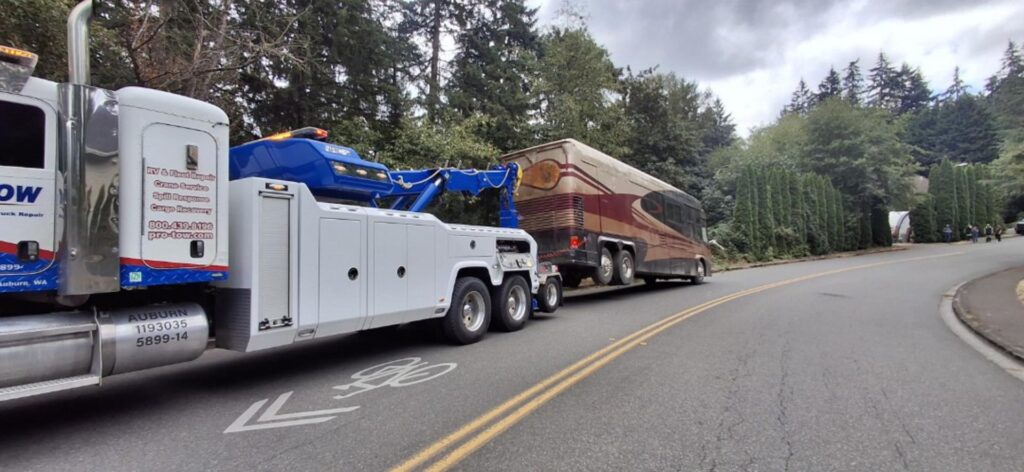
When a vehicle of this size and nature has been sitting for so long, it can be a tricky one to tow. These extra checks ensured that the bus would be properly attached for a safe tow. Battling rush-hour traffic, the tow took a couple of hours, and the operator stopped several times to check the bus, chains and straps.
Navigating a Tight Destination
This old bus needed somewhere to go. The customer directed the operator to a dead-end alley where the bus needed to be parked. There was not enough room to make the turn, so the operator removed the safety chains and the steering wheel strap, had the customer sit in the bus, and steered while the Pro-Tow truck backed it into position.
Once the bus was safely parked, the operator completed the unhooking process and secured the recovery equipment before returning to the Pro-Tow yard.
Heavy-Duty Towing and Recovery in Washington State
Pro-Tow provides heavy-duty towing and recovery services for commercial vehicles, buses, RVs, and other large vehicles throughout Washington State.
We are experienced problem-solvers and often deal with extraordinary cases like this one. That has built expertise in safe recovery planning, rigging and careful maneuvering. When Pro-Tow arrives at your site, you can trust that you’re getting a knowledgeable operator who will assess the situation and determine the best and safest way to approach the recovery.